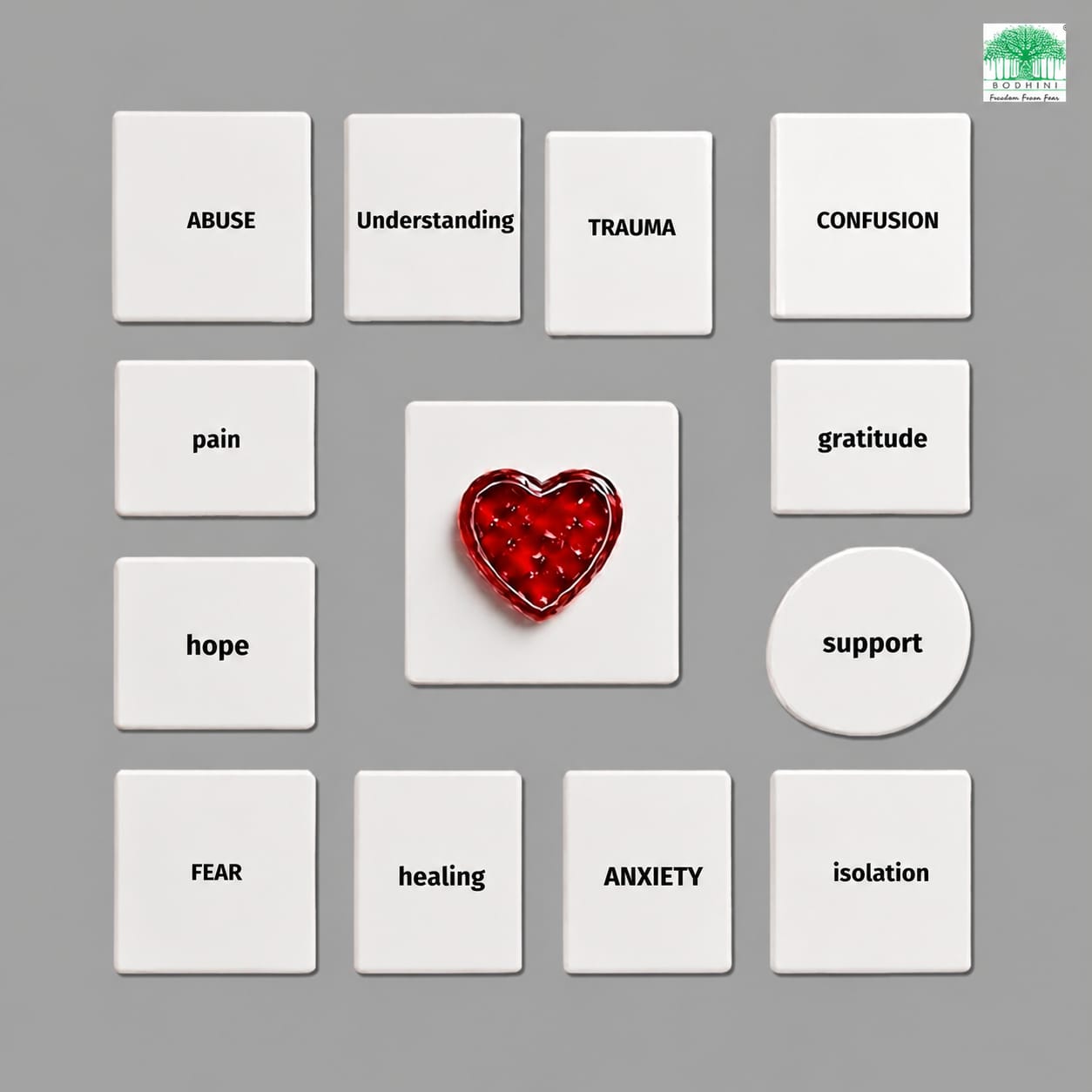
1.Understanding Trauma – to heal and help heal
Do not let trauma define a beautiful life ahead
- Unresolved trauma could lead to severe mental and physical health issues, as well as impact relationships, family and society.
- Some of the most common reasons individuals experience overwhelming trauma may be the result of their experiences of physical, sexual, emotional abuse, combat, disaster or neglect.
- Trauma can manifest differently in individuals.
- Take time to heal, work towards closure, and gradually let go of the trauma.
- If you need support, seek professional help.
Some effects of trauma occur only in extreme cases. Do not self-diagnose. This information is only meant for individuals to understand, recognize patterns and seek support if needed.
You are strength; You are powerfuf.
2.Understanding Trauma
Dealing with trigger related to trauma
A trigger is a memory, situation, thing, place or person that makes someone feel a strong or unexpected emotional reaction or brings back memories of past trauma.
Here are a few ways to deal with it:
- Notice what you feel internally.
- Try to give a name to what you feel.
- Take a deep breath.
- Accept the fact that trauma has occurred.
- Go on a mindful walk, engaging all senses to experience things around you – see, hear, feel, taste, and smell.
- Try journaling/writing about it.
- Try to follow a daily routine.
- Engage in physical activities like running, sports, exercise, yoga, etc.
- Spend time with people you are comfortable with.
- Prioritize your mental health, self-care and sleep.
- Get support.
In a lot of instances, victims are not aware that they are triggered; only that there are reactions or responses that they are unable to control.
Healing from trauma takes time; remember that you are not alone, that there is always help available.
Do not self-diagnose
If you need support-Seek professional help.
3.Understanding Trauma
Dealing with flashback related to Trauma
Flashback occurs when memories of a past trauma reoccurs in the present moment. If you are experiencing a traumatic flashback, here are a few tips that might be of help:
- Find a safe place
If the surroundings that you are in is triggering a flashback, move to a safer space/place if possible.
- Make yourself aware
Tell yourself that you are having a flashback, that it is a memory from the past, that you are alright and can take care of yourself.
- Focus on your breathing
When you are frightened, you may experience irregular breathing. Bring your attention to breathing slowly, to a count of 5 as you breathe in and out.
- Try mindfulness techniques
Be aware of the sensations in different parts of your body. Be in the moment and engage your five senses, by feeling, listening, tasting, observing. For example, splashing cold water on one’s face can help bring you back to the present/cut anxiety.
- Comfort yourself
Listen to soothing music, cuddle with a pet, try relaxation exercises and find ways to comfort yourself.
- Keep a diary
Make a note of what happens when you have a flashback; it could help you spot patterns and triggers and help avoid them in the future.
- Connect and take support
Call or talk to someone who can understand or support you.
- Seek professional help
If you are unable to cope or deal with the flashback, do get professional help.
Remind yourself that a flashback could be a common response after trauma.
Practicing these tips could make it easier to cope.
Do not self-diagnose
If you need support-Seek professional help.
4.Understanding Trauma
Dealing with Trauma related Dissociation
Dissociation can make you feel disconnected and that things around you are unreal. A coping mechanism, it is a defence strategy to mentally escape an unbearable situations (from the past or present) allowing individuals to tolerate what they otherwise could not. It can be mild or severe.
Persistent dissociation can be dangerous, leading to severe memory loss, identity issues, depression, anxiety, and functional impairment requiring help.
Here are a few tips that could help.
- Recognising triggers leading to dissociation and planning coping strategies to manage them.
- Paying attention to one’s senses, like touch, taste, sound, and sight could help bring one back to the present.
- Notice the sensations and movements in different parts of your body that might help you to reconnect with your physical self.
- Meditation and other spiritual practices may help in calming your mind, and in redirecting your attention to the present.
- Try strategies like wearing a watch with time and date, keeping a list of contact details, etc. to make your daily life more manageable.
- Find a calm place, and comfort yourself with blankets, music or in ways that will help soothe you.
- Prioritize yourself and make sure you sleep well, have a healthy diet and are involved in physical activity, like walking, sports.
- Talking to others/reading up on similar experiences might give you new ideas and perspectives on coping and moving forward.
- It would be good to seek professional help if the disassociation is persistent.
Understanding trauma and dissociation could help victims and their families and friends cope and move forward in better ways.
Do not self-diagnose
If you need support-Seek professional help.
5.Understanding Trauma
Post-Traumatic Stress Disorder (PTSD) is a mental health condition that can develop after an individual experiences or witnesses a traumatic event. Common symptoms may include:
- Recurrent distressing memories, flashbacks or dreams of the traumatic event.
- Dissociative reactions causing the individual to feel or act as if the traumatic event were recurring.
- Intense psychological distress and physiological reactions to internal or external cues that symbolize or resemble an aspect to the traumatic event.
- Avoidance of or efforts to avoid distressing memories, thoughts, or external reminders (people, places, conversations, objects, etc.) of the traumatic event.
- Inability to remember an important aspect of the traumatic event.
- Persistent negative emotional state, inability to experience positive emotions and exaggerated negative beliefs about self or others.
- Markedly diminished interest or participation in significant activities.
- Feelings of detachment or estrangement from others.
- Irritable behaviour and angry outburst (with little or no provocation) toward people or objects.
- Reckless or self-destructive behaviour.
- Hypervigilance and exaggerated startle response.
- Problems with concentration, appetite, and sleep.
- Dissociative symptoms such as experience of feeling detached from one’s mental process or body or experiences of unreality of surroundings.
(Source: Diagnostic and Statistical Manual of Mental Disorders (DSM-5))
Do not self-diagnose
If you need support-Seek professional help.
6.Understanding Trauma
Notes to self
- Practicing Self-compassion
Not as an end-point, it is a process.
- Acknowledge the experience
Notice what hurts without judging and dismissing.
- Validate your experience
Remind yourself that what you are feeling is real and normal.
Allow yourself to feel the emotions without judgment-fear, anger, guilt, grief, are all valid.
- Unhook from Self-judgment
Notice and let go of inner criticism and “what ifs, should haves”.
Practice more self-understanding.
- Be kind to yourself
Speak to yourself in the way you would talk to someone you genuinely care about.
- Accept yourself “as you are”
Allow, expand, and make peace with yourself.
You are strength; You are powerful
Do not self-diagnose
If you need support-Seek professional help.
For more information, you can refer our blog:
https://www.bodhini.in/understanding-and-overcoming-ptsd-related-trauma/
Article by: Clincal Psychologist Parvathi Raveendran, and Clinical Psychologist Vidhya N
Date:09-07-2026